Quality‑Assured Human Biospecimens: From Collection to Preclinical Use

Human biospecimens are a critical input for preclinical research, but their scientific value is highly dependent on how they are handled throughout their lifecycle. Variability introduced during collection, processing, and storage can compromise their quality and limit reproducibility. To address these risks, the biobanking and research communities rely on established best-practice guidelines that define how biospecimens should be managed to preserve their integrity and ensure they remain fit for purpose.
Pre-Analytical Variables That Impact the Quality of Human Biospecimens
According to the International Society for Biological and Environmental Repositories (ISBER) Guidelines, pre-analytical variables include all factors that affect a biospecimen before analysis begins. These variables can influence molecular stability, cell viability, and overall integrity. Some arise before collection, such as donor-related characteristics including health status, treatments, age, lifestyle, or biological rhythms. Others occur during or after collection and are often easier to control.
Warm ischemia and cold ischemia times are among the most influential factors. Delays between collection and processing can lead to degradation of DNA, RNA, proteins, or metabolites. Long-term biological specimen storage time also matters, especially when combined with suboptimal conditions. Repeated freeze-thaw cycles further increase the risk of damage, even if other parameters are well controlled.

Nick Smith Photography. Source: ALSPAC website.
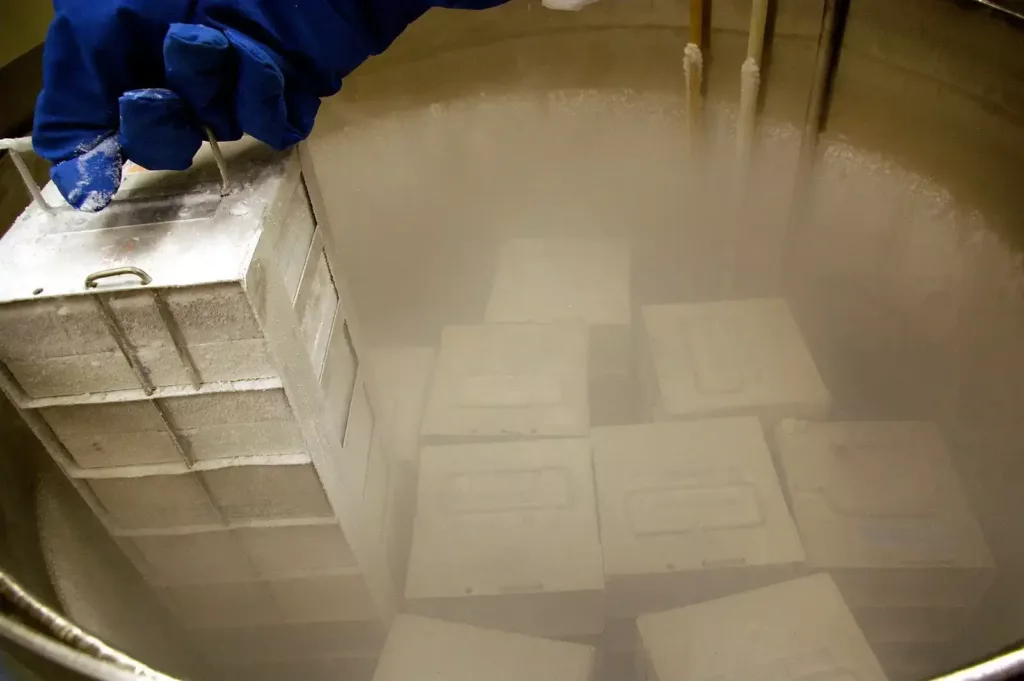
Temperature plays a central role throughout the biospecimen lifecycle. Depending on the specimen type and intended use, samples may require chilled, frozen, or ultra-low temperature storage. Even brief exposure to inappropriate temperatures can cause irreversible changes. While some analytes, such as DNA or RNA, can be preserved at ambient temperature using specific technologies, many biospecimens depend on continuous cold-chain control to maintain stability.
Environmental exposure is another source of biospecimen variability. Light, humidity, and oxygen can alter molecular structures or promote degradation. Because these effects are often not visible, documenting each handling step becomes critical. Detailed records allow researchers to evaluate whether a biospecimen remains suitable for preclinical assays and to interpret results in light of its handling history. Moreover, using the correct preservation solutions, depending on the organ/tissue, ensures better tissue preservation.
Standard Operating Procedures (SOPs) to Ensure Biospecimen Reproducibility
Clear and consistent procedures are essential to reduce biospecimen variability introduced by human handling. Well-defined SOPs describe how each task should be performed, under which conditions, and using which materials. They cover all key steps, from collection and labelling to processing, storage, and distribution.
Effective SOPs include precise instructions on timing, temperature ranges, environmental conditions, and quality control checks. They also define how specimens are identified, how containers are selected, and how deviations are recorded. When procedures are clearly written and consistently applied, differences between operators and locations are significantly reduced.
Access and training are just as important as documentation. Personnel must work with the most current versions of SOPs and receive appropriate training for their roles. Competency assessments help ensure that procedures are not only read but also correctly applied in daily practice. Approval and version control processes prevent outdated or unvalidated methods from being used.
Reproducibility also depends on quality assurance systems that support SOPs. These systems focus on validating methods, qualifying equipment, monitoring performance, and identifying areas for improvement. Together, SOPs and quality assurance create a stable operational framework that protects biospecimen integrity over time.
Quality Assessment Metrics for Biospecimens in Preclinical Assays
Quality assessment helps determine whether a biospecimen is suitable for its intended preclinical use. This assessment is based on predefined criteria linked to the type of analysis being performed. Evaluations can take place at multiple points, including upon receipt, during storage, or before distribution.
Different metrics may be used depending on the specimen. For solid tissue specimens, quality assessment often focuses on preservation of tissue architecture and molecular integrity. Factors such as ischemia time, fixation conditions, freezing method, and storage temperature can influence morphology, protein structure, and nucleic acid quality. Poorly controlled pre-analytical conditions may result in tissue degradation, altered gene expression, or loss of analyte stability, which can affect histological, molecular, or functional analyses.

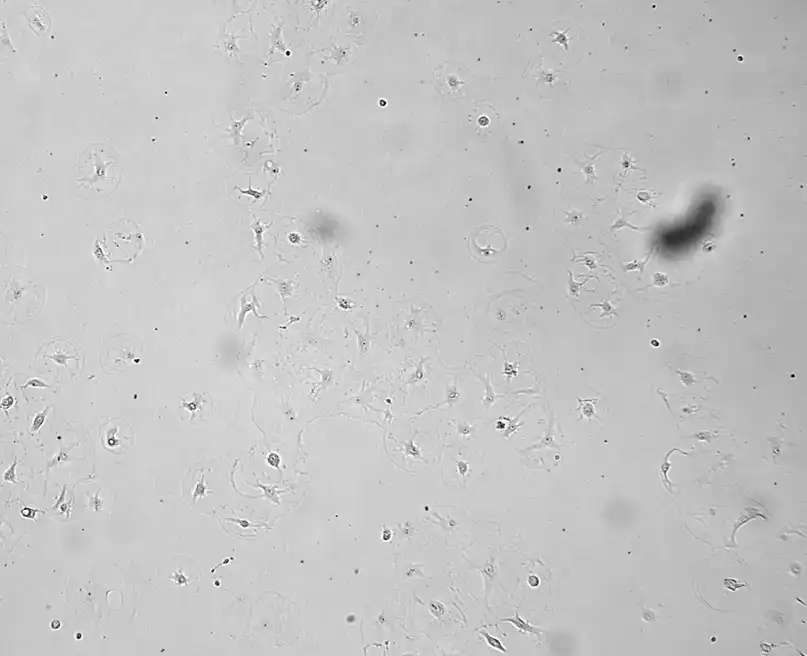
In the case of cell-based biospecimens, viability and functional integrity are particularly important. Pre-analytical variables such as cooling rate, cryoprotective reagents, storage temperature, and thawing conditions can directly impact cell survival and performance. Quality assessment may therefore include evaluation of cell viability, metabolic activity, or functional responses, depending on the intended use.
Internal quality checks are strengthened when combined with external comparisons. Inter-laboratory performance assessments allow repositories and biospecimen providers to benchmark their processes against others. These comparisons can reveal systematic differences in processing or testing and support corrective actions when results fall outside expected ranges.
Strategies to Minimize Biospecimen Variability Across Multicenter Studies
Multicenter studies introduce variability due to differences in collection, processing, and storage practices across sites. Minimizing this variability requires harmonized procedures and consistent documentation.
Key information, such as specimen type, processing conditions, storage parameters, and handling history, must be recorded in a structured and uniform way to reduce ambiguity and support integrated analysis.
Equally important is the consistent recording of pre-analytical variables, including timing and temperature exposure. This enables identification of site-specific differencesand supports accurate interpretation of preclinical results.
Aligned quality practices across centers, including comparable training, shared audit criteria, and common performance evaluations, further reduce variability. End-to-end traceability allows deviations to be detected early and addressed before they impact study outcomes.

From Guidelines to Practice: Reliable Tissue Sourcing for Preclinical Research
At BeCytes, we have developed a dedicated platform to coordinate the donation of human biospecimens for research following high-quality standards according to local and international regulations. The entire process, from donor selection to the tissues or cells delivery, is designed to ensure ethical sourcing, preserve biospecimen integrity, and meet the requirements of downstream preclinical applications, following established ISBER Guidelines.
How to access biological samples for your research project:
- Each tissue sourcing project begins with a detailed discussion to clearly define the scientific scope and technical needs of the study.
- Donor inclusion and exclusion criteria must be established to ensure that the collected biospecimens are appropriate for the intended research use.
- Leveraging an extensive hospital collaboration network, the most suitable clinical sites are then identified to implement the project.
- BeCytes coordinates the preparation of the research protocol and its submission to the relevant Institutional Review Board, ensuring regulatory and ethical compliance from the outset.
- Once approved, the biospecimen procurement process is managed end-to-end, including coordination with clinical teams, collection, and logistics.
Initiate your tissue sourcing project with us!
Sources
Snapes E, Astrin JJ, Bertheussen Krüger N, Grossman GH, Hendrickson E, Miller, Seiler C. Updating International Society for Biological and Environmental Repositories Best Practices, Fifth Edition: A New Process for Relevance in an Evolving Landscape. https://www.isber.org/page/BPR.
Biopreservation and Biobanking. Dec 2023.537546. http://doi.org/10.1089/bio.2023.0140.