Cryopreserved primary human liver cells: improving reproducibility and scalability in preclinical assays

Cryopreserved primary human liver cells offer a practical balance between biological relevance and operational efficiency. When handled correctly, cryopreserved hepatocytes and non-parenchymal cells (NPCs) retain key metabolic, transporter, and immunological functions, enabling laboratories to run toxicology, metabolism, and disease-mechanism studies with far more consistency. Their rise reflects a broader trend in drug discovery: the shift toward standardized, ready-to-use cellular systems that reduce experimental uncertainty and accelerate project timelines.
What are cryopreserved human liver cells and how are they used in in vitro assays?
Cryopreserved primary human liver cells are hepatocytes and NPCs isolated from donor tissue frozen with specialized protocols to maintain their metabolic and functional integrity upon thawing for in vitro use. They can last several years if properly maintained, making them ideal for research that requires the use of the same cells over several months.
Primary human hepatocytes (PHH) are considered the gold standard for in vitro liver research because they retain liver-specific functions and morphology, making them crucial for drug development and toxicology studies. They express a complete set of liver-specific enzymes, including the cytochrome P450 family. Compared to hepatic cell lines, PHH offer more precise in vitro evaluations of drug metabolism, transporter activity, toxicity, and drug-drug interactions that are more likely to translate to human clinical outcomes. NPCs are also essential to create physiologically relevant, predictive liver models. These cells support hepatocyte maturation, modulate liver-specific functions, and participate in pathological processes such as fibrosis and inflammation.
Nevertheless, using primary liver cells requires isolating and characterizing each cell population, a process that demands specialized expertise and reliable access to donor tissue. Choosing cryopreserved cells shifts that burden to providers, streamlining experiments and removing the logistical challenges associated with sourcing and preparing fresh human material.
Key protocols for freezing and thawing primary human liver cells without compromising viability
Experts in primary liver cell isolation use cryopreservation techniques to ensure optimal viability upon thawing. The general cryopreservation protocol starts with the resuspension of the primary liver cells in a cryopreservation medium, typically containing 10% DMSO as a cryoprotectant, often in a basal culture medium supplemented with serum for added protection.
Once resuspended, the cell suspension is aliquoted into cryovials at the desired concentration. The temperature should be decreased at approximately -1 °C per minute (using a controlled-rate freezer or a device like Mr. Frosty/Styrofoam rack) down to -70 °C or -80 °C. After overnight storage at -80 °C, vials are transferred to the vapor phase (-140 °C) or liquid phase (-196 °C) of liquid nitrogen for long-term storage.

Once you receive the primary human liver cells, rapid thawing at 37 °C is recommended to prevent intracellular ice formation, followed by gradual dilution and removal of the cryoprotectant at 4 °C, which prevents osmotic shock and maintains cell health.
According to our scientific team, the recommended general protocol for thawing cryopreserved cells includes the following steps:
- Before starting the thawing process, switch on a refrigerated centrifuge at 4°C.
- Remove the cryopreserved hepatic cells from the liquid nitrogen and immediately place them in a 37°C water bath. Hold and rotate the vial gently until the contents are partially thawed.
- Remove the vial from the water bath, wipe dry, rinse the cryovial with 70% ethanol for disinfection, and transfer it into the sterile flow hood.
- Using a pipette, gently transfer the cell suspension contained in the cryovial into a conical tube containing cold medium.
- Add 1 mL of medium to the cryovial to recover the cells that have remained inside. Then, combine it with the cells in the conical tube to ensure that all cells have been transferred.
- Depending on the cell type and species, adjust centrifugation time and speed, and centrifuge the cells to obtain a pellet.
- After centrifugation, aspirate the supernatant and resuspend the cell pellet in cell culture medium.
- Determine viability and number of cells. After determining the number of cells, proceed with the required assay.
Specific protocols, including centrifugation speed, duration, and medium volume, are provided upon receipt of the cells.

As experts in liver cell isolation and characterization, our scientific team has compiled some extra tips to thaw and maintain your cryopreserved hepatic cells in the lab:
- Do not leave hepatocytes floating in the cryopreservation medium for too long if you don’t want to lose viability. After removing the cryopreserved hepatocytes from the liquid nitrogen, immediately place them at 37°C in a water bath until the cell suspension is partially thawed. Ensure partial thawing by leaving a small ice pellet in the cryovial to prevent over-thawing.
- Seed the correct cell density to obtain a confluent monolayer of hepatocytes. Evenly distribute the cells throughout by manually shaking the plate in a T-shape and checking it under a microscope.
Advantages of cryopreserved hepatocytes and NPCs for scalability and reproducibility in CRO workflows
Cryopreserved hepatocytes and NPCs offer robust advantages for Contract Research Organizations (CROs):
- Scalability: Large lots from single donors or pooled cells allow consistent studies across multiple programs and timepoints.
- Reproducibility: Standardized, assay-ready formats reduce variability between experiments and users, increasing data confidence for preclinical decision-making.
- Convenience and resource saving: Ready-to-thaw vials streamline workflows, reducing time, labor, and cost compared to fresh human liver tissue isolations.
- Extensive characterization: Commercial cryopreserved cells are QC tested for yield, viability, metabolic function, and genetic stability before distribution, further improving data quality and reliability.
At BeCytes, we have mastered the isolation and cryopreservation protocols to grant you access to primary liver cells, including NPCs. Our proprietary protocol allows us to obtain primary hepatocytes with a post-thawing viability superior to 85%.
Our liver cells are ethically sourced from donor tissues and meticulously characterized. The Certificate of Analysis (CoA) includes donor demographic information (HLA, age, gender, diseases…), number of cells and viability after thawing, and days in culture, among others. You’ll also find details on spheroid and organoid formation and the induction of cytochrome phases I and II.

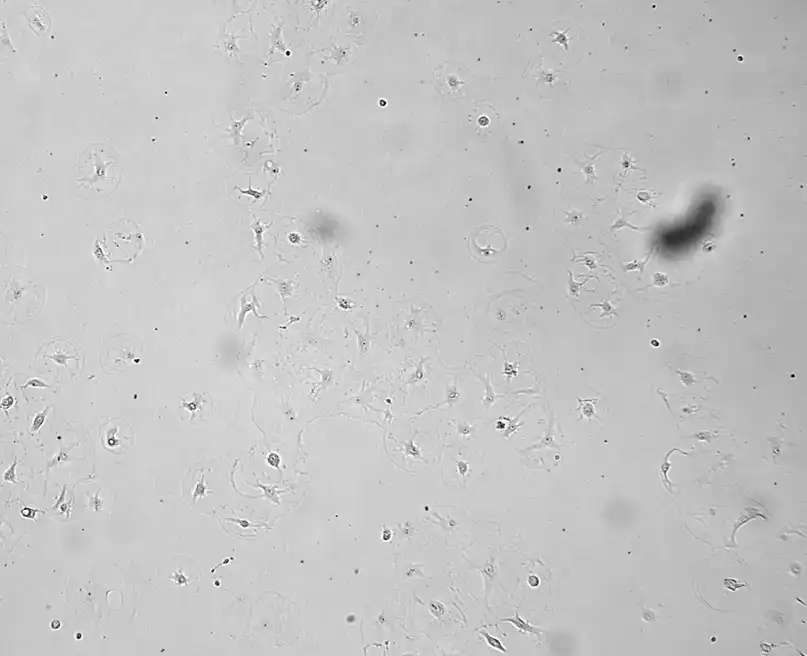
Human hepatocytes thawed and seeded in collagen-coated 24-well plates according to Becytes Biotechnologies’ protocol. After purification, post-thaw yield and viability are evaluated using a trypan blue exclusion assay. Each lot includes its corresponding viability data in the Certificate of Analysis.
Sources
Guo L, Dial S, Shi L, Branham W, Liu J, Fang JL, et al. Similarities and differences in the expression of drug-metabolizing enzymes between human hepatic cell lines and primary human hepatocytes. Drug Metab Dispos. 2011 Mar;39(3):528–38. doi: 10.1124/dmd.110.035873
Terry C, Dhawan A, Mitry RR, Hughes RD. Cryopreservation of isolated human hepatocytes for transplantation: State of the art. Cryobiology. 2006 Oct;53(2):149-59. doi: 10.1016/j.cryobiol.2006.05.004.